

A person comes into the federal criminal system in one of two ways: after the issuance of a complaint or an indictment. Under most circumstances a warrant for the person’s arrest follows the filing of either of these documents. After a person is arrested, they must be taken before a magistrate judge for their initial appearance. This is the first court appearance, and a federal criminal defense attorney must be present.
If a person does not have a federal criminal defense lawyer at this time, the court will either appoint them a lawyer, or proceed and give them time to hire someone. At this appearance, a defendant is also formally notified of the charges brought against them.
In certain cases, the government may file a motion requesting that a client be held in jail while their case is pending. The client can agree to stay in custody while their case is pending, or elect to have a detention hearing. The purpose of a detention hearing is to determine whether a person should be released from jail, while their case is pending. Two of the most common concerns for the court are whether a person is a flight risk, or danger to the community. During the detention hearing, it is crucial to show that our client has long standing ties to the community, a home, steady employment, and sometimes, assets that can be used as collateral for a bond. This hearing usually takes place no later than five days after a client’s arraignment. Preparation for this hearing is essential, because this hearing determines whether or not you will be released from jail while your case is pending. As an experienced white collar criminal defense attorney, Temani Adams, has extensive success at securing her client’s release on bond.
In preparation for a detention hearing, we research our client, and communicate with their family and friends to determine who is willing to testify on their behalf at the detention hearing, or simply be present for support. We also determine where our client will live while their case is pending, if they are willing to abide by a curfew, and any other conditions that the court may impose. These details are needed in order to support our argument that our client should be released. Success at the detention hearing is the difference between our client working with us on their case from jail, or in our offices. We strive to win our client’s release.


This is one of the most critical, and tedious steps in a federal criminal case. In the discovery phase, we request and review the government’s evidence. We often hire experts and investigators to analyze, and seek out evidence that is beneficial to our client’s case . Often times, there is lots of valuable information that our team is legally entitled to, that the government doesn’t want to turn over. When this happens, we seek court intervention. After obtaining all of the government’s evidence, we then move forward with pre-trial motions.
One pre-trial motion, that is commonly filed in federal criminal cases, is a Motion to Suppress. The basis for each Motion to Suppress is different. A Motion to Suppress is used when the facts and the evidence in a case supports the judge disallowing certain evidence to be used. For example, if the evidence and facts establish that officers illegally obtained evidence, a Motion to Suppress would be filed, and a hearing requested. At the hearing, the judge decides whether or not the evidence can be used.
After reviewing the government’s evidence and discussing possible defenses, a client may decide that it is in their best interest to enter into a plea agreement. Individuals may decide to plea for a variety of reasons. In the federal system, a person who pleads guilty may expect a much shorter sentence than a person who proceeds to trial and loses. Pleading guilty can also result in lesser charges.
In the federal system, we rely on the United States Sentencing Guidelines to assess the value of any plea offers, and to determine possible sentencing outcomes. Careful analysis of case facts, in conjunction with the United States Sentencing Guidelines, alert us to possible sentencing enhancements that a client may face if they plead guilty, or is found guilty at trial. No one can guarantee any particular result. In the federal system the ultimate sentencing decision is made by the judge.

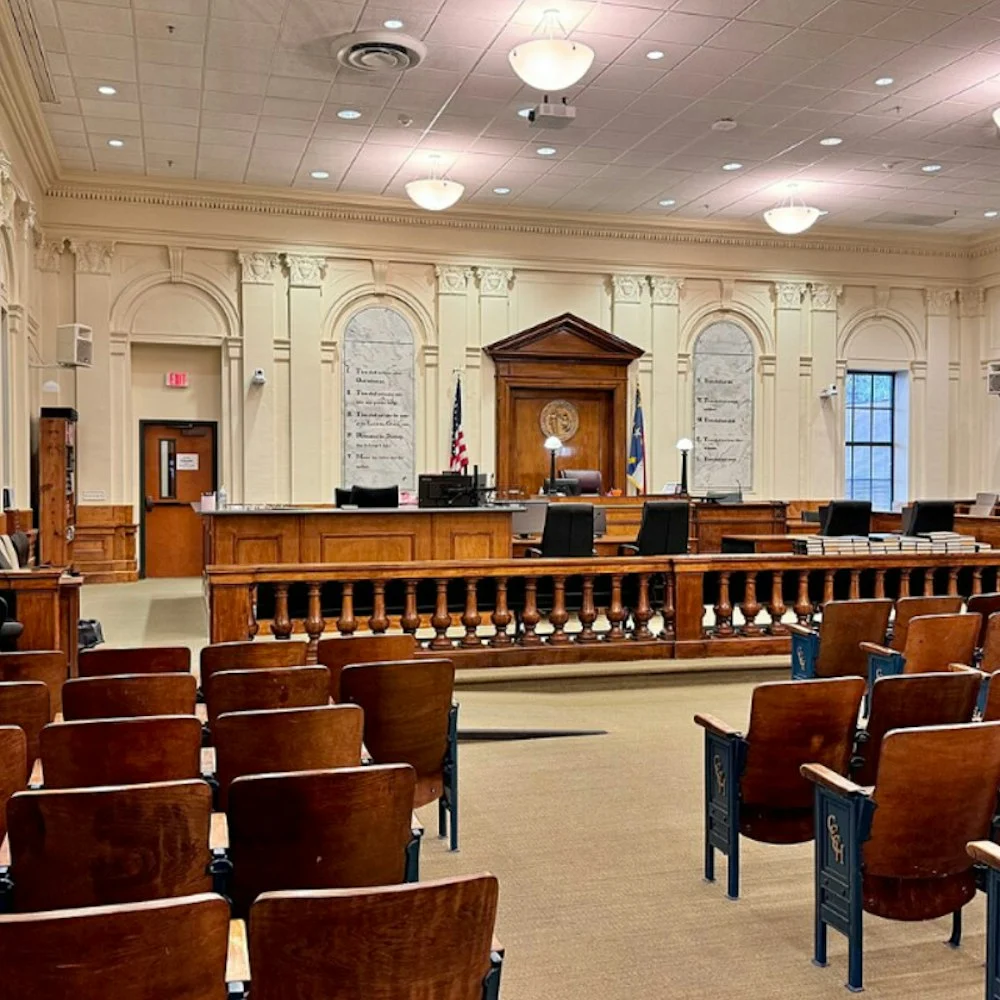
A person who decides to plead guilty must appear in court to change their plea from not guilty to guilty. At this hearing, a judge reviews the statute of the crime(s) and penalty ranges that a person may face upon a finding of guilt. The judge also assures that there is a factual basis for the plea of guilt. Finally, the judge reviews any plea agreements between the defendant and the government. At this end of the hearing, a finding of guilt is entered, and the defendant may be taken into custody. After conducting this hearing, the client is interviewed by a United States Probation Officer and a presentence investigation report (more commonly referred to as a “PSR”) is prepared.
A client who chooses not to enter a guilty plea, is entitled to a trial. At trial, the government must present evidence that supports a guilty verdict. A jury can only return a verdict of guilty if it believes that the government has proved each element of the charged offense(s), beyond a reasonable doubt. This is the highest burden of proof in the United States.
Jury selection, also known as voir dire, is the first part of a trial. Jury selection is the only time that the attorneys are allowed to speak directly to, and ask questions of, potential jurors. Jury selection is an artform, and only the most skilled attorneys are successful at it. Jury selection is important because it allows our team to learn about the biases and beliefs of potential jurors. Not every juror is right for your case, and it is our job to make sure that the jurors who are not right for your case, don’t make it into the jury box.
The next phase of trial is opening statements. During opening statements, both the government and the defense are allowed to tell the jury what they expect the evidence to prove, or not prove. The government is then allowed to present its case in chief, with us presenting our case in chief later. Throughout trial, we are able to confront the government’s witnesses, through cross examination, and attack the government’s evidence. We are also allowed to present our own witnesses and evidence. After both sides have presented their case in chief, the case moves to closing arguments. Closing arguments are the last chance for both sides to argue to the jury why they should prevail. After hearing all of the evidence, and the arguments of the attorneys, jury deliberations begin. A jury can render a verdict of not guilty, guilty or no outcome at all, which would result in a mistrial.
If your case results in a not guilty verdict, the case is over with, and you are released from any obligations to the court. If your case results in a guilty verdict, the next step is preparation of the PSR. If your case results in a mistrial, there are several different possible outcomes. The first thing that must be done after a mistrial, is for the government to decide whether or not they want to retry the case.
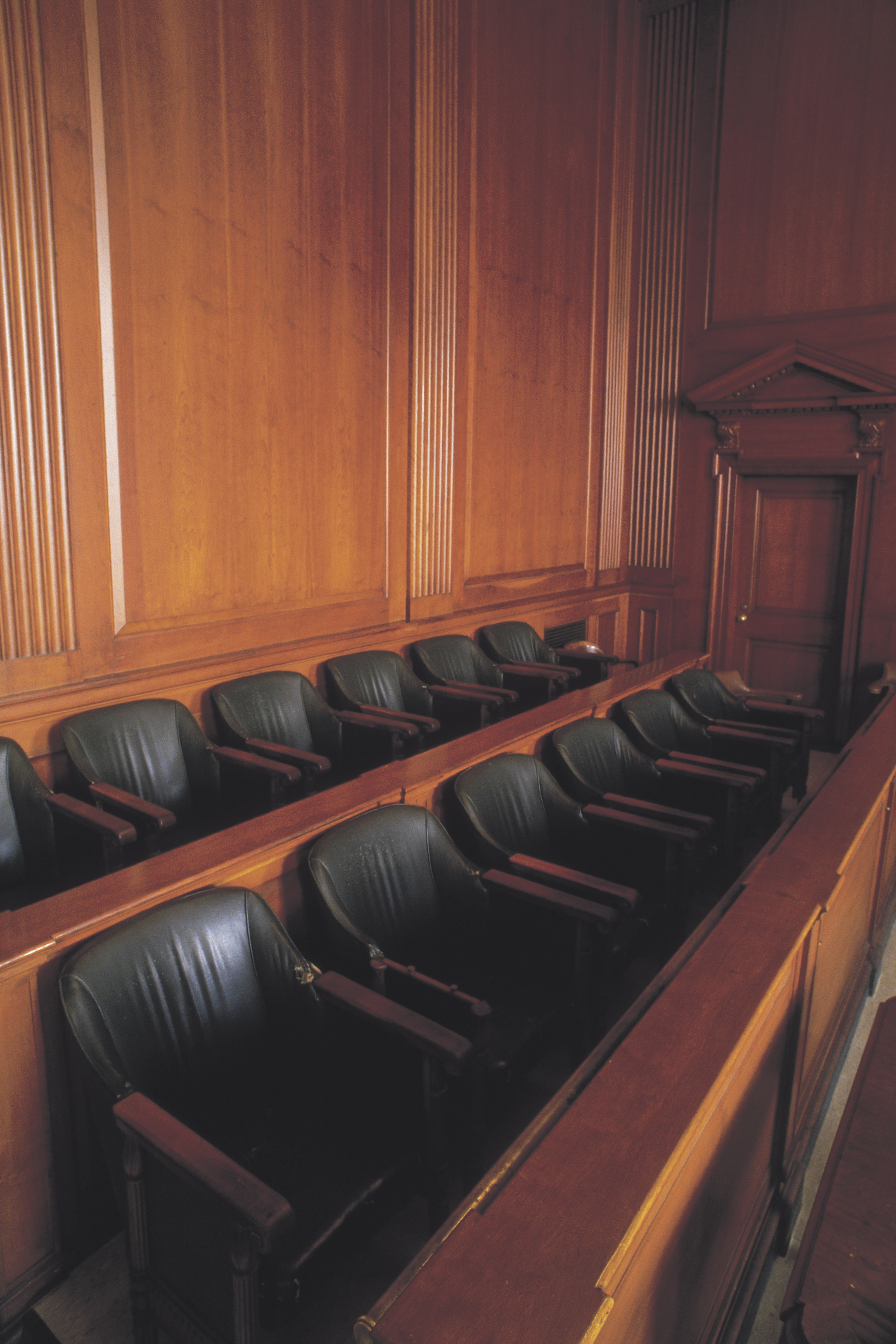

During the time between rearraignment, or a guilty verdict, and sentencing, a client will have an interview with a United States Probation Officer. This officer works for the court. It is the probation officer’s job to create a presentence investigation report (more commonly referred to as a “PSR”) for the judge, prior to sentencing. A PSR tells the judge about the facts of your case, your family background, criminal history and more.
Once we receive and review the PSR with our client, we may file objections to certain provisions of the report. During this time, we simultaneously prepare for sentencing by obtaining character letters from friends, family members, and employers. We also, obtain research and data to support our final sentencing presentation.
After the court has received and reviewed objections to the presentence investigation report, character letters, and sentencing memorandums, a sentencing hearing is held. At this hearing we may present additional evidence to substantiate our objections to the PSR, or to rebut the government’s objections. The judge then rules on each objection. Family members and friends supporting our client may also speak in support of their loved one. Victims of the offense may also be heard. Lastly, the judge will give our client a chance to speak on their own behalf. After the presentation of all evidence, and hearing from all of the parties, the judge pronounces the sentence in open court.
A client who we obtained release for at their detention hearing, may be required to surrender at the sentencing hearing. In some cases, the judge may allow our client to self-surrender to a prison at a later date. The option to allow a client to surrender at a later date is solely made by the judge.